




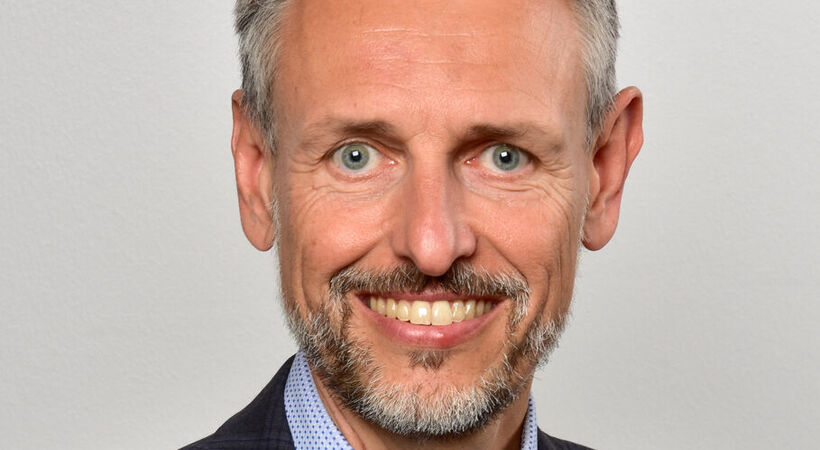
Dr. Alexander Fleischanderl, has been appointed to the position of head of green steel at Primetals Technologies, having previously held the positions of technology officer and head of environmental solutions.
The role comes at an important time for the global debate around decarbonising hard-to-abate industries such as steel. The steel industry currently accounts for around 8% of global carbon dioxide emissions, and the World Steel Association estimates that steel demand will see a further increase of 2.2% to 1,896.4 Mt this year, following a 4.5% growth in 2021. It is crucial that the sector, and hard to abate industries, shift to production methods that are less carbon-intensive and support the development of a low-carbon society.
Steel Times International spoke with Dr. Fleischanderl on his appointment, green steel, and reaching net zero.
''I believe my team and I have what it takes to make a significant impact on the industry’s journey to green steel.''
Dr. Alexander Fleischanderl, head of green steel at Primetals Technologies
Steel Times International: What are the key questions of your new role?
Dr. Alexander Fleischanderl: It’s still early days for ‘green steel’, but it clearly is a topic of multiple dimensions and great complexity. It covers everything from renewable energy production and energy storage solutions—including hydrogen and ammonia production—to the optimal use of these energy sources for the actual production of green steel. What makes things even more complex is raw-material availability: supplies of quality scrap are limited, and the same is true for high-grade iron ores. Since so many stakeholders are involved, it will be part of my role to consider the standpoints and experiences of many contributors, to establish a holistic approach, and to develop a cohesive strategy that takes into account all the relevant steps from basic R&D work to politics to strategy to concrete project development. It is indeed a role I will greatly enjoy, as it corresponds directly to my passion for future-oriented solutions. I believe my team and I have what it takes to make a significant impact on the industry’s journey to green steel.
''Fundamentally speaking, because of the material properties of steel, it will never be “zero-carbon”. However, we are indeed aiming for a dramatic reduction in carbon emissions stemming from steel production...''
Dr. Alexander Fleischanderl, head of green steel at Primetals Technologies
Steel Times International: How confident are you that steel production can be made a zero-carbon process, and what kind of timelines are we looking at?
Dr. Alexander Fleischanderl: Fundamentally speaking, because of the material properties of steel, it will never be “zero-carbon”. However, we are indeed aiming for a dramatic reduction in carbon emissions stemming from steel production, particularly in the upstream area. I am confident that, together with our customers and industry partners, we will reach this goal sooner rather than later. Even today, it is theoretically possible to engineer and build steel plants capable of producing ultra-low-carbon-emissions steel. The only thing keeping us from doing so is the availability—and viability—of renewable energy, meaning green electricity and hydrogen. Both requires a massive scale up, which we will see happening.
''As an ultimate goal, I envisage the ‘autonomous plant’, and I believe this vision is not as distant as it may seem.''
Dr. Alexander Fleischanderl, head of green steel at Primetals Technologies
Steel Times International: What contribution can Industry 4.0 solutions such as artificial intelligence, machine learning, and the Internet of Things make to the decarbonization of steel production?
Dr. Alexander Fleischanderl: Digital technologies take an integral part in our decarbonization efforts. Digital twins can help to optimize production processes—by increasing energy efficiency, reducing yield loss throughout the production chain, easing the development new steel grades, and by calculating carbon emissions per production unit and per produced coil. In essence, digitalization is all about optimizing the complete production chain for efficiency, because it allows us to fine-tune and orchestrate all production-related aspects. Digital tools are also essential for preserving the knowledge of a plant’s metallurgists and experienced operators. As an ultimate goal, I envisage the ‘autonomous plant’, and I believe this vision is not as distant as it may seem.
