




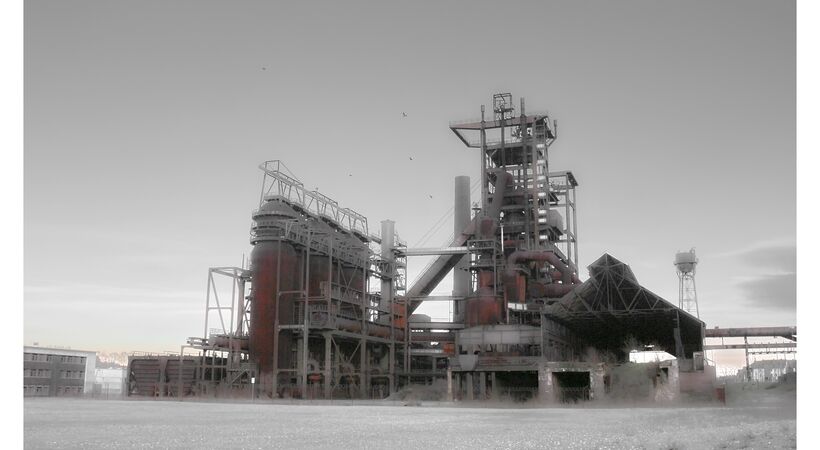
MPs thinking they might have been enjoying the Easter sunshine tomorrow will not be happy as Parliament is being recalled to debate an emergency law to save British Steel's Scunthorpe plant from imminent closure, according to a report by the BBC.
The last time Parliament was recalled over the weekend was because of the Falklands crisis back in the early eighties.
The plan is to discuss legislation to give ministers the power to protect the Lincolnshire steel plant where 2,700 people are employed.
The British Government has been saying for the past couple of days that "all options are on the table" meaning that nationalisation of the facility cannot be ruled out.
Talks about how to keep the steel mill running have been ongoing following assertions by Jingye Group, the owner of British Steel, that the blast furnaces there are no longer financially sustainable. Not the sort of news the UK steel industry needs to hear at this difficult time for the industry globally.
The irony of the situation, of course, is that Jingye Group is a Chinese company and it's the Chinese steel industry that has effectively caused all the financial problems for British and global steelmakers. With low to non-existent demand for Chinese-made steel in China, the vastly over-produced stockpiles of steel, manufactured in environmentally unfriendly blast furnaces, have been dumped on foreign shores and, ultimately, have been the cause of tariffs. Remember during Trump's last term in office he initiated the Section 232 tariffs using emergency powers normally only employed in times of dire crisis. Well, now they're as commonplace as apple pie and China is continuing to ship its environmentally unfriendly steel around the world without a thought about what their actions are doing to steelmakers.
A lot of this is news we already know. For example, that Jingye Group is losing £700,000 per day keeping the Scunthorpe plant open and that talks are ongoing is common knowledge. Now it's come to MPs getting up on a Saturday morning to deal with the crisis and many people in the UK won't be sympathetic, arguing that MPs earn enough money to be inconvenienced once in a while and especially if going into the office will save the British steel industry, which is what this is all about.
The last thing the UK wants is to be the only nation in Europe that doesn't have its own steel industry, although it is sailing perilously close to such a reality.
There is, however, a need for everybody to wise up and realise that yes, there are problems with Chinese overcapacity that so far has been dealt with by tariffs and countervailing duties, but closing down blast furnaces is something that will become commonplace as nations do their bit to save the planet. Globally, 70% of steel is produced in blast furnaces and they are still being built for steelmakers in China and South East Asia. This has to stop and they need to be replaced by less environmentally damaging electric arc furnaces (EAFs). It's already happening at Tata Steel in Port Talbot and yes, there will be job losses, they're unavoidable, but this is the direction of travel the steel industry is taking whether it likes it or not. In the USA, over 70% of steel is already being made in EAFs and the industry there is, arguably, the greenest in the world.
People often talk about the quality of the steel produced in EAFs being far inferior to the metal coming out of blast furnaces. Well, maybe now, but in the very very near future – as is already being proved by the technological superiority of EAFs employed by Nucor Corporation, Steel Dynamics Inc, Commercial Metals Company, Big River Steel and so on, the quality is getting better and the old claim that EAFs were only good for making trash cans is outdated.
So let's see what happens. Will British Steel be nationalised (as some politicians think it should be) or are there other options? Well, that's the whole point of tomorrow's debate in the House of Commons. The UK Green Party thinks nationalisation is the only way – obviously – but others, like Reform UK, simply state that the situation is 'desperate'.