




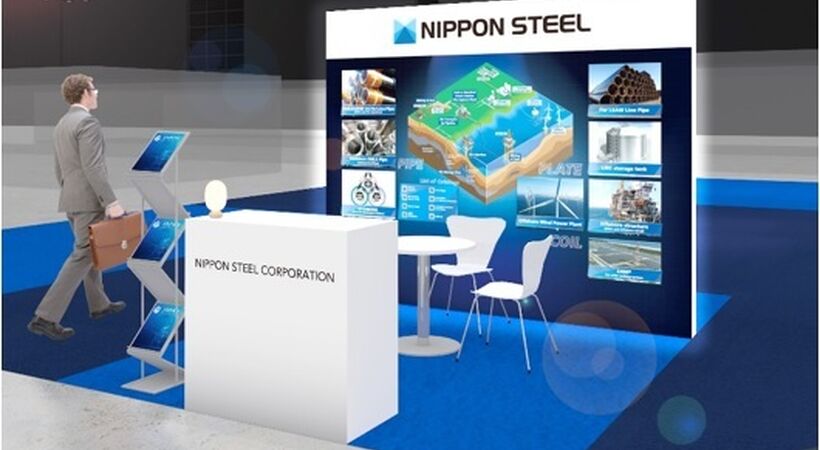
Japanese steel giant Nippon Steel Corporation (Nippon Steel) has announced that it will participate in OTC 2025 (Offshore Technology Conference 2025), which is scheduled to take place in Houston, Texas, in the USA (5-8 May).
OTC is one of the world's largest offshore-related exhibitions, attracting over 1,300 exhibiting companies and around 30,000 attendees each year.
At this year's event, Nippon Steel will feature high-performance products such as high-end OCTG that can be used in high CO2 concentration environments, such as CCS1, which is expected to be a major step toward achieving carbon neutrality; HYDREXEL™ (HRX19™), a stainless steel product for handling high-pressure hydrogen with advanced resistance to hydrogen embrittlement, which is required for commercial hydrogen stations for the hydrogen economy; and HTUFF™, a thick steel plate with enhanced HAZ toughness2, which is used for offshore wind power generation equipment mounts and offshore structures. As the need for climate change solutions increases worldwide, Nippon Steel plans to introduce energy-related products that are expected to serve as solutions for promoting decarbonization.
Through participation in events like OTC 2025 Nippon Steel hopes to continue meeting the decarbonization needs of energy companies worldwide, and promote technological development and product offerings, that will enable the company's Carbon Neutral Vision 2050.
The Nippon Steel Group claims that it will continue to pursue the world's best technology and manufacturing capabilities and contribute to improving society through activities that conform to the Sustainable Development Goals (SDGs) adopted by the United Nations, with a focus on affordable and clean energy and climate action.
References
*1: CCS (Carbon dioxide Capture and Storage)
Carbon dioxide capture and storage technology that collects CO2 emitted from industrial activities. after isolating it from other gases and then stores and injects it deep underground.
*2: HAZ toughness
The toughness of parts where the metallographic structure changes due to thermal effects during welding.