




The latest data disclosed by the Global Forum on Steel Excess Capacity (GFSEC) has revealed a further increase in global overcapacity that requires immediate and comprehensive trade actions by GFSEC like-minded countries.
According to the European Steel Association (EUROFER)the impact of this destructive dynamic, distorting the global steel market and threatening thousands of jobs across Europe alone, needs to be tackled as a matter of urgency.
Axel Eggert, director general of EUROFER, said that the time for waiting for overcapacity to resolve itself through market forces is over. "We need a credible strategy focusing on concrete actions that GFSEC countries can take, including unilateral trade actions. Persisting in keeping markets open only benefits those countries that withdrew from the Global Forum and those that continue to export excess steel, either in reaction to disruptive import surges or in denial of their own overcapacity”.
Eggert said that such trade actions must be comprehensive, addressing the full range of products and countries, arguing that steel excess capacity is a global issue affecting the entire industry. "While we support the principles put forward by the GFSEC, we note that a vast number of countries have already imposed tariffs on steel imports," he said.
"Persisting in keeping markets open only benefits those countries that withdrew from the Global Forum and those that continue to export excess steel, either in reaction to disruptive import surges or in denial of their own overcapacity”.
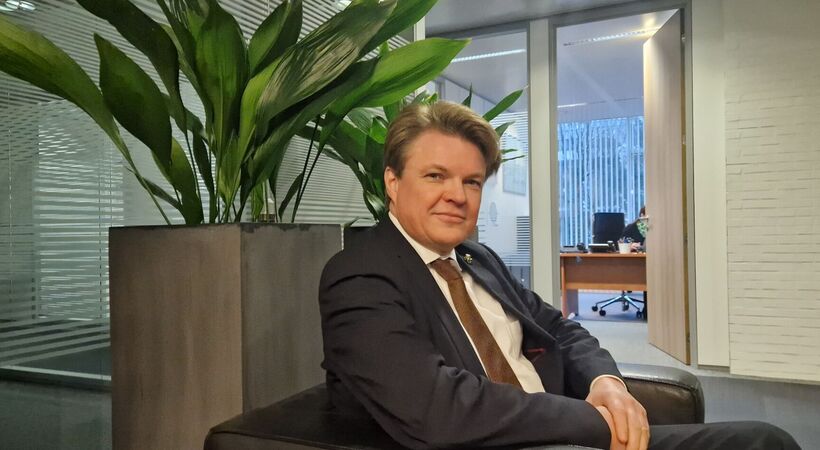
Axel Eggert, director-general, European Steel Association (EUROFER).
Yesterday's GFSEC Ministerial Meeting revealed new data projecting that global steel excess capacity will reach 630 million metric tonnes (MMT) by 2026 – equivalent to five times EU steel crude production in 2023.
EUROFER describes 'this unprecedented challenge' as a threat to the broader economies of regions with open markets, notably the EU. Given steel’s critical role in employment, innovation and clean technologies essential to the green transition, this surplus of carbon-intensive, underpriced steel not only distorts markets but undermines competitiveness and decarbonisation efforts, asserts EUROFER.
“European steelmakers are investing billions of euros in decarbonisation, yet these efforts are at risk of being nullified just by the additional excess capacity projected to come online by 2026. For every million tonnes of lost EU production capacity, an equivalent volume of imports floods our market. We need emergency actions to contain the spillover effects of global excess capacity and a structural solution to address its root causes”, concluded Mr. Eggert.