




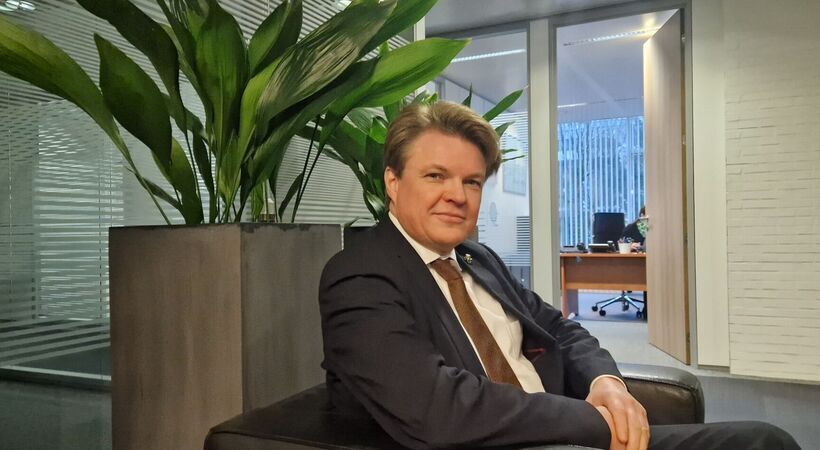
The European steel industry is facing irreversible decline unless the EU and Member States take immediate action to secure its future and green transition. These are the chilling words of the European Steel Association (EUROFER) whose director-general, Axel Eggert, says that ‘the clock has already struck midnight’.
According to EUROFER, a robust European Steel Action Plan under an EU Clean Industrial Deal, can no longer wait or manufacturing value chains across Europe will simply vanish.
Despite repeated warnings from the sector, the EU leadership and governments have yet to implement decisive measures to preserve manufacturing and allow green investments across Europe. Recent massive production cuts and closure announcements by European steelmakers show that time has run out, EUROFER says.
"How many more plant closures, job losses, and stalled decarbonisation projects will it take before the EU and Member States wake up?,” asked Eggert. “Europe’s de-industrialisation is accelerating, with steel, automotive, renewables, and batteries all on the brink. Without immediate action, Europe’s manufacturing base will disappear. We urge the new European Commission and EU governments to stop this bloodshed and adopt swift measures on trade, CBAM, energy and steel scrap, while working on a structural solution to preserve our industry’s competitiveness, Eggert continued.
"Without urgent EU intervention, we face total dependence on China, the US, and other global competitors where industries thrive under favourable conditions."
Axel Eggert, director-general, EUROFER.
“This isn’t just about steel; it’s about all the value chains – from automotive to renewables – that depend on it. It’s about Europe’s resilience, prosperity and climate leadership. Without urgent EU intervention, we face total dependence on China, the US, and other global competitors where industries thrive under favourable conditions. We stand ready to work with the new Commission to prevent this collapse. We need impactful measures now, instead of incremental improvements that fail to address root challenges such as global steel overcapacity and high energy prices", Eggert concluded.
Here are some key facts which, claims EUROFER, outline the severity of the problems facing the European steel industry:
• Global steel overcapacity reached 551Mt in 2023 – four times the EU's annual steel production – and continues to grow. The OECD projects an additional 157Mt of carbon-intensive capacity by 2026.
- EU steel production has plummeted by 34Mt since 2018, falling to just 126Mt in 2023. Imports now account for 27% of the EU market, further undermining domestic production.
- Nearly 100,000 steel jobs have been lost in the past 15 years, with more cuts looming.
- Capacity utilisation in the EU has sunk to an unsustainable 60%.
EUROFER is calling for an ambitious European Steel Action Plan to address the crisis. Critical measures include:
• Assertive enforcement of the EU trade defence instruments, and a more robust ‘tariffication’ regime to stop the destruction of the EU steel market by the spill-over impact of global steel excess capacity.
• A CBAM that works in practice, preventing circumvention or resource shuffling and preserving EU steel exports.
• Affordable clean energy by passing the benefits of renewable and low-carbon electricity to consumers.
• Retaining steel scrap in Europe for the circular economy, decarbonisation and energy security.
