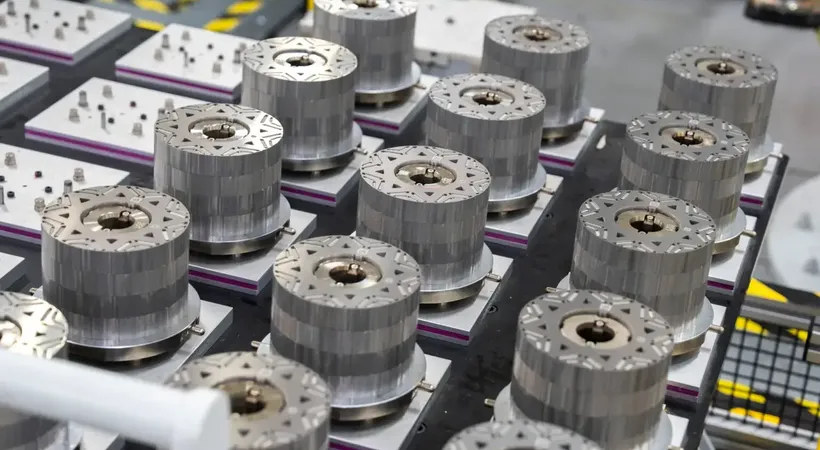
In an £11 million research and development collaboration called CirculaREEconomy (CREEM), EMR are investing £730,000 to develop recovery and recycling technology.
The project will focus on enabling rare-earth magnets to be recovered more efficiently, sustainably and safely from electric vehicle motors.
CREEM forms a part of the UK’s Department of Business and Trade’s £2.5 billion DRIVE35 campaign, which supports projects that help the transition to zero-emission vehicle manufacturing.
On the project EMR will work with Ionic Technologies as well as Ford Technologies, Bentley Motors, Bamford Bus Company (Wrightbus), Less Common Metals (LCM) and the British Geological Survey (BGS).
The investment will allow EMR to safeguard high-grade steel often used to build these motors, which can be downcycled during some recycling processes.
“CirculaREEconomy continues EMR’s investment in the recycling of the Neodymium (NdFeB) magnets, which can be found in everything from electric vehicles and hi-fi equipment to the largest offshore wind turbines, as reflected by the recently completed SCREAM and Re-Rewind projects,” said Roger Morton, Managing Director for Technology and Innovation at EMR
“A circular economy for these materials won’t only safeguard the planet’s biodiversity and add resilience to vital supply chains, it will also allow our customers to achieve circularity, move closer to their net-zero targets and align with the ELV Regulations and the EU’s Critical Raw Materials Act – which mandates a quarter of demand for this material must be met by recycling by 2030.”