




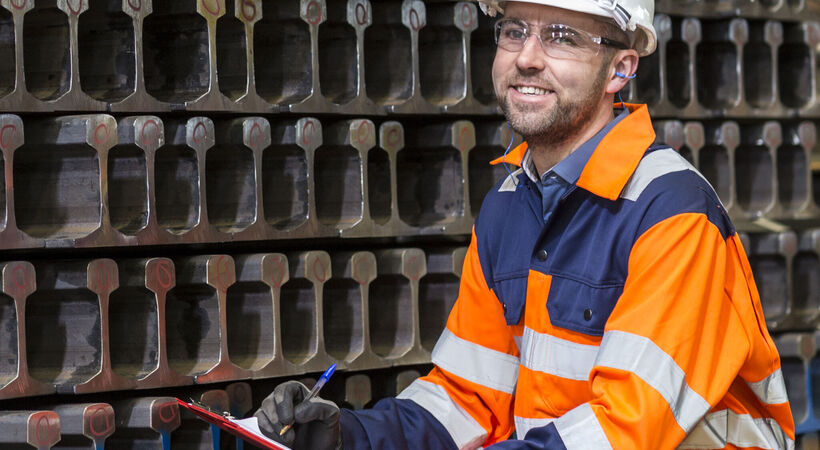
A report earlier today on the BBC news website speaks of a commercial solution for British Steel being "within reach".
The British Government's Culture Secretary Lisa Nandy, speaking to the BBC, said that British Steel will "continue to be an important part of our economy for years to come" and that an agreement over its future was "achievable and within sight".
Nandy told the BBC that British Steel - which employs 2,700 people - will "continue to be an important part of our economy for years to come" and an agreement over its future was "achievable and within sight".
British Steel is, ironically, a Chinese-owned business. Ironic because a lot of the problems besetting not only the UK steel industry but the global steel manufacturing space is predominantly floods of cheap imported steel from, yes, you've guessed it, China.
According to the BBC report, British Steel is at risk of running out of raw materials within weeks, raising fears over whether the company's two blast furnaces in Scunthorpe can keep running.
These are difficult times for the steel industry generally not least because of President Donald Trump's 25% tariffs on steel exports to the USA.
It comes as the steel industry deals with a 25% tariffs on exports to the US, which came into force last month.
As already reported, Jingye claims it has invested over £1.2bn in British Steel to maintain current operations. The company claims to have suffered losses of around £700,000 a day.
Nandy is said to be 'absolutely confident' that a future for British Steel can be secured.
Some industry observers, like Simon Boyd, managing director of REIDsteel, a British Steel customer, believes that government intervention is the only way forward.
The BBC report claims that the government has offered £500m of support to 'partly fund' a switch from traditional blast furnaces to more energy efficient electric arc furnaces, but this has been rejected by Jingye Group as EAFs, as they are known, cannot make 'virgin steel' from iron ore, even if it has been proved in the USA – where electric steelmaking is the predominant process with over 70% of steel made in EAFs – that the technology's increasing sophistication means that exposed sheet steel can be made (or it will be pretty soon!).
The danger for the UK is that failure to retain blast furnaces in Scunthorpe will, says Simon Boyd, managing director of Reid Steel, a British Steel customer, result in a reliance upon imported steel from, wait for it, China, where the BF is the predominant process, as, indeed, it is globally.
Boyd claims that electric arc furnaces cannot make new "virgin steel" from iron ore. Instead, they rely upon recycled steel scrap, which tends to have more imperfections.
While Boyd claims that Scunthorpe's current blast furnaces produce 'the highest grade of steel available', according to the BBC report, it could be argued that continued reliance upon the traditional blast furnace, which spews out CO2 by the bucket load, is not in keeping with global and, indeed national environmental objectives.
That nationalisation of British Steel is on the cards is pleasing to the ears of Reid Steel's Boyd who was "very encouraged" to hear the government is "finally" considering it. But the Government is giving nothing away, with Chancellor Rachel Reeves claiming that 'all options remain on the table', something Roy Rickhuss, general secretary of the UK's largest steel workers union Community, agrees with.
Nigel Farage, leader of Reform UK is a little more alarmist about things, claiming that it the plant isn't nationalised within three days then it's curtains. He described steel production in the UK as 'a vital strategic asset', according to the BBC report, claiming that the UK would be the only country in the G20 that doesn't produce primary steel.
While nationalisation is being talked up, the British Conservative Party, headed by Kemi Badenoch wants to know what the commercial options are and Sir Ed Davey, leader of the UK's Liberal Democrats highlighted the strategic importance of the UK steel industry and the need to protect jobs.
Source: BBC News with additional comments from Matthew Moggridge, editor, Steel Times International