




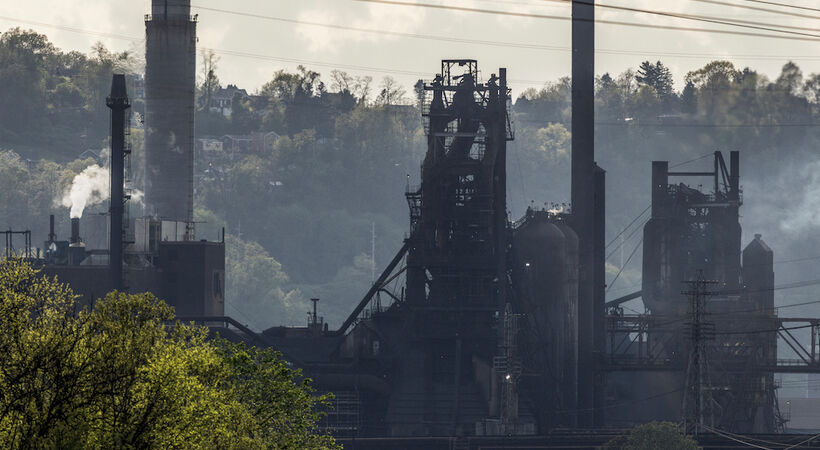
US president Joe Biden is preparing to block the takeover of US Steel by Nippon Steel, media reports say, in a controversial move that critics claim would lead to job losses and could hinder foreign investment in the US.
The $15bn deal was announced by Japan's Nippon Steel and US Steel last year, but shortly after ran into criticism from politicians and the US Steelworkers union, which said it did not want to see the 123-year-old firm fall into foreign hands.
US Steel shares fell nearly 20% after reports of the decision, which involves a company headquartered Pennsylvania, a swing state, during a tense campaign season.
Biden had already moved to have the deal probed on national security grounds and voiced opposition to the takeover earlier this year. Both Donald Trump and Kamala Harris, rivals in the race for president, have also come out against the merger.
US Steel said it had not received any update about a formal decision and said it stood by the deal, noting that Japan was one of America's ‘most staunch allies’.
"We fully expect to pursue all possible options under the law to ensure this transaction, which is [the] best future for Pennsylvania, American steelmaking, and all of our stakeholders, closes."
Spokesman from US Steel
US Steel said it had not received any update about a formal decision and said it stood by the deal, noting that Japan was one of America's ‘most staunch allies’.
"We fully expect to pursue all possible options under the law to ensure this transaction, which is [the] best future for Pennsylvania, American steelmaking, and all of our stakeholders, closes," a spokesman said.
The company held a rally earlier this week to show support for the merge, warning that blocking the deal would put 'thousands of jobs' at risk, prompting it to shut factories and potentially move its headquarters from Pennsylvania.
"We want elected leaders and other key decision makers to recognise the benefits of the deal as well as the unavoidable consequences if the deal fails."
David Burritt, chief executive, US Steel
"We want elected leaders and other key decision makers to recognise the benefits of the deal as well as the unavoidable consequences if the deal fails," chief executive David Burrit said in a statement.
The deal has been under review by the Committee on Foreign Investment in the US (CFIUS), a group led by the Treasury Department that looks at national security concerns.
A report by the BBC stated that a White House official avoided denying claims that the president planned to block the deal, saying only that receiving the CFIUS recommendation would be the 'next step in this process'.
Source: BBC